Skip to content

FIRE PROTECTION

Keep recurring fire protection service organized, consistent and profitable.

Prowise automates tasks related to scheduling recurring maintenance and inspection of fire protection systems. 

  • Identify customers due for inspection or maintenance
  • Connect with customers through personalized email sequences
  • Collect approvals and schedule appointments in the technician calendar
  • Generate weekly reports showing activities executed and performance metrics
Fire protection inspector
Revenue Cycle

The inspection may be required. The maintenance revenue is often missed.

Fire protection contractors already have a valuable recurring customer base. The challenge isn't finding more customers — it's consistently following up with the ones they already have.

When follow-up is manual, service opportunities fall through the cracks:

  • Customers are contacted late, or not at all
  • Inspections and maintenance get delayed
  • Admin teams spend hours chasing approvals and appointments

The result: profitable recurring work already sitting in your customer base never gets booked.

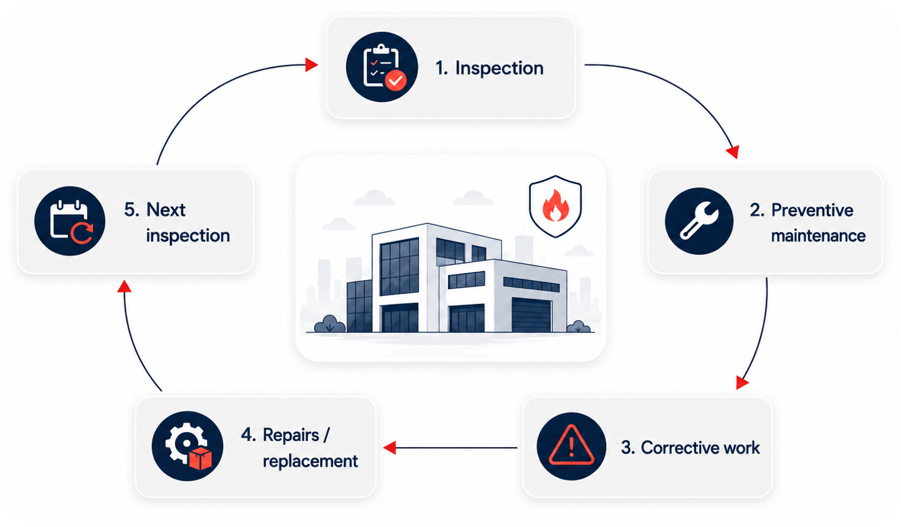
Picture1-1

An inspection shouldn’t be the end of the transaction.

A recurring inspection can create the next service opportunity.

It can lead to:

  • preventive maintenance;
  • corrective work;
  • replacement parts;
  • repairs;
  • follow-up visits;
  • additional compliance-related service.

Prowise helps create a structured follow-up process so those opportunities are not left to memory, spreadsheets or an overloaded admin team.

More inspections completed. More maintenance captured. More value from every customer relationship. 

the solution

Identify

Customers due for inspection or maintenance are identified from your existing service records.

Follow up

Personalized communications are sent automatically from your company.

Get approval

Collect service approvals, POs or required information.

Book the work

Coordinate appointments with your existing calendar or scheduling process.

Weekly visibility & performance

Summarize activities and key KPIs such as conversion rate, responses, bounced emails, booked appointments, and follow-ups still required.

calculate your opportunity

How much recurring service revenue is already in your customer base?

Use the calculator to estimate the annual recurring revenue each customer could bring with Prowise. You can adjust all the variables, but keep in mind that Prowise's agent typically reaches a 70% booking rate. 

400
Customers due annually
×
$350
Average service value
×
70%
Booking rate
=
$98,000
Potential recurring
service revenue
And that's before acquiring a single new customer.
Your potential recurring service revenue $98,000 per year
+ See potential admin time savings
Potential admin time saved 80 hours par year
inspector - fire protection

Built for recurring fire protection workflows

  • fire alarm inspections;
  • sprinkler inspections;
  • fire extinguisher service;
  • backflow testing;
  • emergency lighting;
  • suppression systems;
  • preventive maintenance;
  • corrective work follow-up.

Frequently asked questions

Can we include quotes or service documents?

Yes. Prowise can include service information and supporting PDF documents as part of the follow-up process. 

Can customers provide a PO before booking?

 Yes. The workflow can be configured to collect approvals, purchase orders or other required information before moving to scheduling. 

Can Prowise coordinate inspections performed by a subcontractor?

Yes. Prowise can work with an external calendar and coordinate appointments with a subcontractor’s availability. The exact setup will depend on the calendar or scheduling tool being used. 

Can different inspection frequencies be configured?

Yes. Workflows can be configured based on the required service frequency — for example quarterly, semi-annually, annually or according to another recurring schedule. 

Can Prowise account for different inspector qualifications?

Yes. Scheduling rules can take technician or inspector qualifications into account, so specific types of inspections are only assigned to team members with the appropriate expertise.