
Identify the opportunity
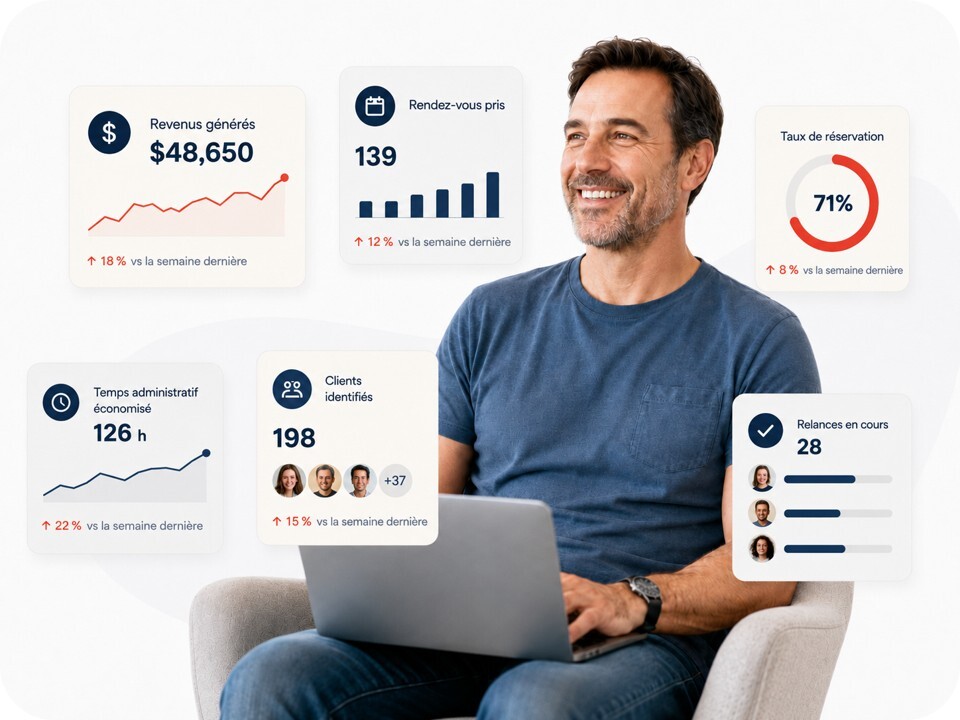
Prowise identifies customers who are due, or coming due, for their next recurring service.
Prowise turns recurring service opportunities into booked appointments without the admin work.
the opportunity already exists
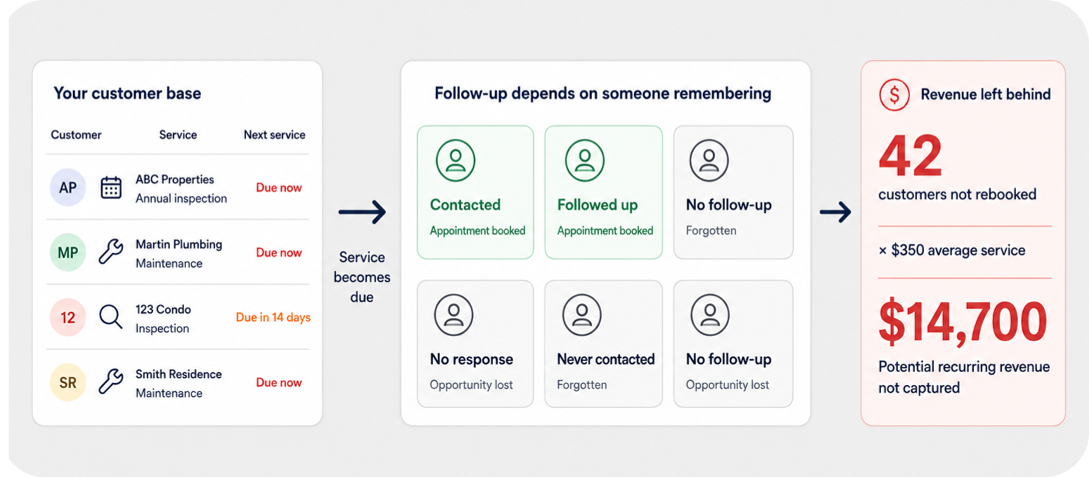
Every customer due for maintenance, inspection or service is a future revenue opportunity, if someone remembers to follow up.
the solution
Prowise identifies customers who are due, or coming due, for their next recurring service.
Personalized emails are sent at the right time, with follow-ups continuing until the customer responds.
Customers confirm or schedule their service, while your team keeps visibility over every opportunity.
The Follow-Up Automation is a workflow that manages the repetitive administrative steps tied to inspection or maintenance service calls.
A typical process can include:
Instead of relying on spreadsheets, memory, or manual reminders, the process runs automatically and consistently.
Follow-up calls can lead to additional paid work, maintenance opportunities, and stronger repeat business.
For example, if your business books just 10 extra inspection-related visits per month at an average value of $250, that can represent $30,000 per year in additional revenue. At 20 visits per month, that becomes $60,000 annually. Business you are doing with no sales and admin work.
Without automation, someone has to remember the timing, contact the customer, send the proposal, capture the purchase order, coordinate scheduling, and follow up after the visit.
Deloitte found that organizations using automation beyond the pilot stage reported average cost reductions of 32%.
For a home service business, that often means:
A timely follow-up helps protect the relationship with your customer.
It shows that your company is organized, proactive, and easy to work with.
For plumbers working with property managers, warranty calls can also do more than fulfill a service obligation. They are a valuable way to stay top of mind, check in on overall satisfaction, and open the door to conversations about upcoming needs.
A well-timed follow-up may help you:
In that sense, a maintenance or inspection follow-up is not only an administrative task. It can also support client retention, relationship building, and future revenue.
It is an automated workflow that reminds past customers about upcoming warranty service, offers booking options, schedules the visit, and supports post-visit invoicing.
It is useful for home service businesses such as plumbing, HVAC, electrical, roofing, and other companies that complete work tied to warranty periods.
No. It removes repetitive administrative steps so your team can focus on exceptions, service quality, and customer relationships.
Because it is simple, measurable, low-friction, and directly tied to revenue and retention.