
Warranty Follow-Up Automation for service businesses

Turn missed warranty follow-ups into booked visits, stronger client relationships, and repeat revenue

Warranty follow-ups are easy to delay.

The original job is done. The team has moved on. Inbound calls keep coming in. Office staff are focused on what feels urgent today.

Then 11 months pass.

A warranty visit that should have been scheduled never gets booked. A property manager never gets contacted. A homeowner forgets. The opportunity disappears.

Warranty Follow-Up Automation helps home service businesses automatically reconnect with past customers at the right time, offer booking windows, schedule the visit, and trigger invoicing after the work is done.

It is one of the simplest ways to capture more revenue from work you have already won.


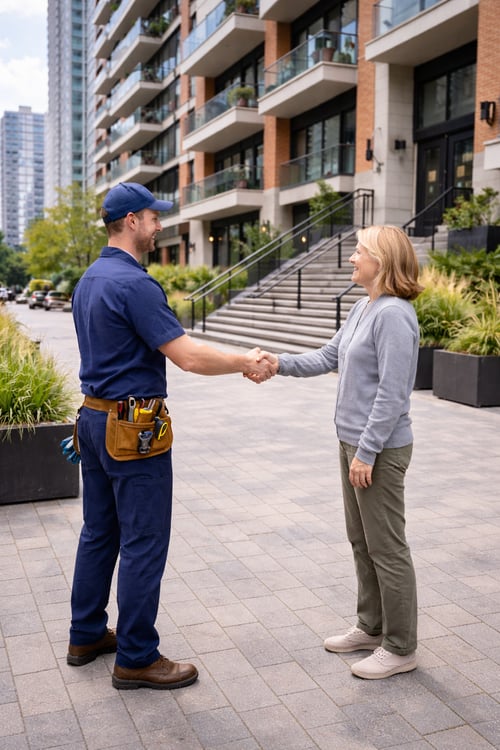
Woman and plumber in front of a condo

What is Warranty Follow-Up Automation?

Warranty Follow-Up Automation is a workflow that manages the repetitive administrative steps tied to warranty service calls.

A typical process can include:

  • an automatic reminder sent 11 months after the original job
  • outreach by email or SMS
  • booking windows offered to the customer
  • the appointment added to the calendar
  • the invoice or follow-up sent after the visit

Instead of relying on spreadsheets, memory, or manual reminders, the process runs automatically and consistently.

Key benefits

More revenue captured

Warranty visits can lead to additional paid work, maintenance opportunities, and stronger repeat business.

For example, if your business books just 10 extra warranty-related visits per month at an average value of $250, that can represent $30,000 per year in additional revenue. At 20 visits per month, that becomes $60,000 annually.  Business you are doing with no sales and admin work.

Less admin work

Without automation, someone has to remember the timing, contact the customer, coordinate scheduling, and follow up after the visit.

Deloitte found that organizations using automation beyond the pilot stage reported average cost reductions of 32%.

For a home service business, that often means:

  • fewer repetitive tasks
  • less manual tracking
  • faster booking
  • smoother invoicing

Better client retention

A timely follow-up helps protect the relationship with the homeowner or property manager.

It shows that your company is organized, proactive, and easy to work with.

For plumbers working with property managers, warranty calls can also do more than fulfill a service obligation. They are a valuable way to stay top of mind, check in on overall satisfaction, and open the door to conversations about upcoming needs.

A well-timed follow-up may help you:

  • reinforce trust with the property manager
  • learn whether they were satisfied with the original work
  • identify unresolved issues before they become frustrations
  • hear about upcoming projects, service needs, or potential new business opportunities

In that sense, a warranty follow-up is not only an administrative task. It can also support client retention, relationship building, and future revenue.

Why automate this process first?

Not every workflow is the right starting point for automation. Warranty follow-up is.

It is one of the smartest first processes to automate because it is structured, easy to implement, and directly connected to revenue.

Predictable

Warranty follow-ups happen on a known timeline. You already know when the reminder should be sent based on the original job date. You also know what was installed, which helps your team prepare ahead of time and bring the right parts or materials to the visit.

Simple to schedule

Unlike inbound service calls, warranty follow-up calls are usually straightforward. The customer already knows your business and is often expecting the outreach. There are fewer questions to ask, little to no qualification needed, and less urgency, since the visit can often be scheduled within a few days or weeks.

Low friction

 This workflow runs alongside your existing operations without disrupting them. It takes repetitive warranty-call administration off your office team’s plate, so they no longer have to think about tracking and managing those follow-ups manually. It is also relatively simple to connect with the systems you already use. 

Fast ROI

Because the process is simple and repeatable, it is usually quick to deploy and cost-effective. In many cases, the extra revenue captured through booked follow-up visits can offset the cost of the tool in a very short time.

Relationship-driven

Warranty calls are not only about service. They are also a valuable opportunity to stay visible with homeowners and property managers, confirm satisfaction, and uncover future work. A well-timed follow-up can help keep your business top of mind when the next project or service need comes up.

That is what makes warranty follow-up one of the most practical, low-risk, and high-return automation opportunities for a home service business.


FAQ

What is Warranty Follow-Up Automation?

It is an automated workflow that reminds past customers about upcoming warranty service, offers booking options, schedules the visit, and supports post-visit invoicing.

Who is it for?

It is useful for home service businesses such as plumbing, HVAC, electrical, roofing, and other companies that complete work tied to warranty periods.

Does it replace office staff?

No. It removes repetitive administrative steps so your team can focus on exceptions, service quality, and customer relationships.

Why is this a strong first automation?

Because it is simple, measurable, low-friction, and directly tied to revenue and retention.